







Hotel Water Park ROI: How Aquaparks Pay Back for Resorts
Adding slides and play areas to a resort is a capital decision, and owners rightly ask what it will return. Hotel water park ROI is rarely a single ticket line in the accounts; it shows up in occupancy, room rate, length of stay, on-site spending and how well the property competes for families. That makes it harder to measure, but not impossible. This guide explains where the return comes from, which costs to include, and how to build a payback model for your own property, so you can decide whether, and at what scale, an aquapark makes sense for your hotel.
Why Resorts Invest in Water Attractions
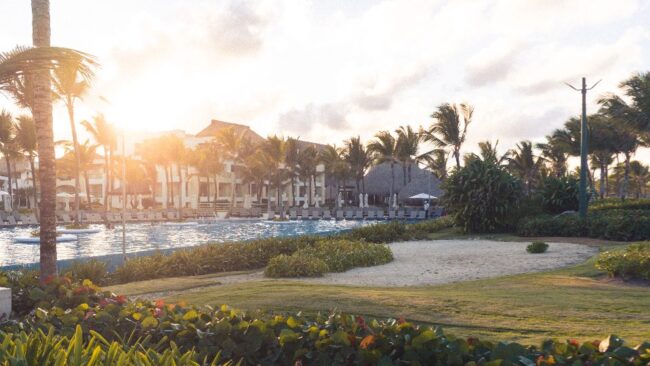
For many families, the pool area is the deciding factor when choosing a holiday. Parents compare photos and reviews looking for one reassurance: the children will be happy here. A visible aquapark answers that question before the guest reads a single line of description.
Resorts typically invest in water attractions for a combination of reasons:
- To compete for family bookings in a crowded destination
- To justify a higher room rate or a premium all-inclusive package
- To keep guests on the property, where they spend on food, drinks and services
- To create photo and video material that sells rooms through booking platforms and social media
- To extend the season, especially when attractions are heated or partially covered
None of these effects is guaranteed. They depend on your market, your guest profile and the quality of the attractions, which is why a structured ROI model matters.
Where the Return Comes From: Occupancy, Room Rate and Length of Stay
Think of the aquapark as an amenity that influences several revenue lines at once. The main channels are:
- Occupancy. More nights sold, particularly in shoulder months and on weekdays when family demand would otherwise be weaker.
- Average daily rate (ADR). The ability to charge more for rooms or packages because the offer is stronger than nearby competitors.
- Length of stay. Families with entertained children often book longer stays.
- Ancillary spending. Guests who stay on the property spend more in restaurants, bars, shops and kids’ clubs.
- Repeat and referral business. Children who loved the slides ask to come back, and their parents post the photos.
- Day passes or events, where local regulations and capacity allow outside visitors.
Not every channel will apply to your property. An all-inclusive resort will see the effect mainly in rate and occupancy, while a city hotel might focus on weekend packages and day passes.
The Cost Side: Capex, Opex and Space
A credible model includes every cost, not just the attraction price.
Capital expenditure (capex) covers the attractions themselves, structures, pumps and piping, pool works, water treatment, civil works, theming, landscaping, design fees, installation and contingency. Our guide on how much it costs to build a water park explains these drivers in detail.
Operating expenditure (opex) includes energy for pumps and heating, water and chemicals, lifeguards and attendants, maintenance, spare parts, insurance and any additional marketing.
Space has a cost too. Land used for an aquapark is land not used for rooms, villas or quiet pool terraces. Count that opportunity cost honestly, especially on a tight urban or beachfront plot.
How to Model Hotel Water Park ROI and Payback for Your Property
You do not need a complex financial model to start, but you do need clear assumptions. A simple framework:
- Establish a baseline. Record current occupancy, ADR, average length of stay and ancillary spend per guest, by month.
- Estimate the uplift for each channel. Use your own booking data, sales team input and comparable properties in your market. Be conservative.
- Calculate incremental revenue. Additional room nights multiplied by ADR, plus the rate uplift on all occupied nights, plus extra ancillary spend.
- Convert revenue to contribution. Apply your normal margins; incremental room revenue usually carries a higher margin than food and beverage.
- Subtract incremental opex. Energy, staff, chemicals, maintenance and insurance attributable to the aquapark.
- Divide capex by net annual contribution. This gives a simple payback period; for investment decisions, add a discounted cash flow.
- Run scenarios. Test a low, base and high case, and check what happens if the uplift is half what you expected.
The result will be specific to your property. There is no universal payback period, and anyone quoting one without seeing your data is guessing.
Choosing Attractions That Match Your Guest Profile
The best ROI comes from attractions your guests actually use. Look at the ages of the children who stay with you, typical family size and how long guests stay.
- Families with young children value shallow-water areas, kids’ animations and spray elements close to shaded seating.
- Mixed-age families get the most from aquatic play structures that combine small slides, climbing and interactive water features in one footprint.
- Teenagers and adults look for one or two signature rides from a waterslide range that suits the available height and space.
Attractions with high rider capacity per footprint and low water flow tend to be easier on operating budgets. Ask suppliers for flow rate and capacity figures for every option, so you can compare running costs as well as purchase prices. For an example of how water attractions can be integrated into a coastal setting, see our project in Durrës, Albania.
Phasing the Investment to Reduce Risk
You do not have to build everything at once. Many properties start with a core zone, often a kids’ area and one family slide, and reserve space, foundations and utility capacity for later additions. Once the first phase is operating, you have real data on usage and booking impact to justify the next step.
To make phasing work, plan the full concept from the beginning. Decide where future towers will stand, size pipes and plant rooms with spare capacity, and keep construction access open. Retrofitting infrastructure later is usually more expensive than preparing for it.
Frequently Asked Questions
How long does it take for a hotel water park to pay back?
It depends on the scale of the investment, your market, your guest profile and how strongly the aquapark lifts occupancy, rate and length of stay. Two similar hotels in different destinations can see very different results. The reliable way to answer is to build a simple payback model with your own baseline data and conservative uplift assumptions, and to base capex on a site-specific quote.
Does a small aquapark make a difference for a mid-size hotel?
It can, if it matches the guests you want to attract. A compact kids’ area with a play structure and a family slide can make a mid-size hotel noticeably more attractive to families, especially if competitors nearby offer only a standard pool. The key is to choose attractions for your guest profile rather than to replicate a large water park in miniature.
Which hotel aquapark attractions have the lowest operating costs?
As a rule, attractions with lower water flow and simpler supervision cost less to run, such as spray play elements and smaller play structures in shallow water. Large slides and pool attractions need more pump power and staff. Ask for flow rates and pump specifications for each option so you can compare running costs directly.
Considering an aquapark to strengthen your resort’s family offer? Contact the Aqualine team to discuss your site, your guests and your budget, and receive a tailored proposal.