

How Much Does It Cost to Build a Water Park? 9 Cost Drivers
How much does it cost to build a water park? It is the first question most investors ask, and the honest answer is that it depends on what you are building, where and for whom. A compact splash zone for a family hotel and a destination park with a wave pool, lazy river and several slide towers are entirely different investments. Published “average” figures rarely survive contact with a real site. This guide breaks the budget into nine cost drivers, so you can understand where the money goes, ask suppliers the right questions and compare proposals on equal terms.
How Much Does It Cost to Build a Water Park? Why There Is No Single Price
Two projects with the same number of slides can differ enormously in total cost. One might sit on flat, well-drained land with utilities at the boundary; the other might need retaining walls, a new power connection and a long access road. One might use existing changing rooms and a restaurant; the other must build them from scratch.
That is why reliable budgets are built from the bottom up, driver by driver, rather than from a price per square meter. The table below summarizes the nine drivers covered in this guide.
| Cost driver | What pushes cost up | Where you can often save |
|---|---|---|
| 1. Project type and capacity | High peak-day attendance targets | Realistic design-day sizing |
| 2. Site conditions | Slopes, poor soil, high groundwater | Using natural height for slide towers |
| 3. Civil works and utilities | New power, water and sewer connections | Reusing existing infrastructure |
| 4. Attraction mix | Many large or signature rides | A balanced mix for all ages |
| 5. Slide size and material | Tall towers, long runs, premium finishes | Matching ride height to your audience |
| 6. Water treatment and plant rooms | Large water volumes, separate circuits | Efficient hydraulic design |
| 7. Theming, landscaping and guest facilities | Custom sculpture, new buildings | Theming concentrated at key points |
| 8. Logistics, installation and commissioning | Remote sites, complex lifting | Early planning and good site access |
| 9. Operating costs | Energy, staff and chemicals | Efficient pumps and smart layouts |
Project Type and Target Capacity
Everything starts with who you are building for and how many guests you expect on a busy day. A hotel or resort aquapark serves in-house guests and is sized by room count and guest profile. A holiday park needs family-friendly, compact attractions. A municipal facility must handle high daily throughput, and a destination water park competes regionally with a broader attraction mix.
Peak capacity drives the size of pools, the number of attractions, filtration, changing rooms, food outlets and parking. It is the single largest multiplier in the budget, so test your attendance assumptions carefully before design starts.
Site Conditions and Civil Works
Topography, soil bearing capacity, groundwater level and access for trucks and cranes all influence civil works. A sloped site can be an advantage, because slide start platforms can use natural height instead of tall steel towers. It can also be a challenge if it requires retaining walls, extensive drainage or deep foundations.
Utilities are often underestimated. Water parks need substantial power for pumps and, in many cases, heating, along with a reliable water supply and a way to discharge backwash water. Check connection capacities and lead times early.
Attraction Mix: Slides, Pools and Play Areas
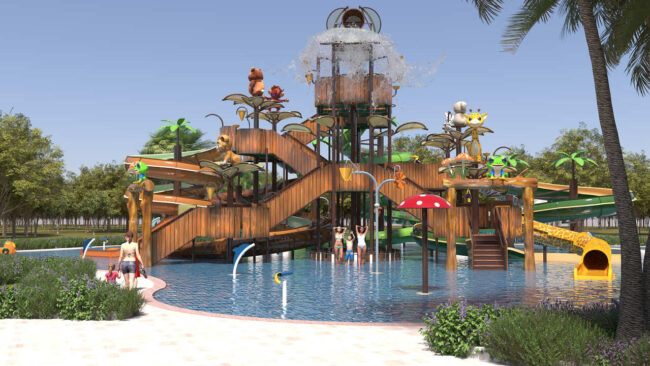
The choice and number of attractions shape both the investment and the guest experience. Typical building blocks include body and tube slides, family raft slides, aquatic play structures, kids’ areas with spray elements, and larger pool attractions such as wave pools, surf pools and lazy rivers.
Larger and taller rides require more steel, more flume sections, larger splash pools and higher pump capacity. Pool attractions such as those in our surf pool, wave pool and lazy river range add significant water volume and mechanical equipment. A balanced mix with something for toddlers, families and thrill-seekers usually delivers more value than a few oversized rides. You can explore typical options in our waterslide range.
Slide height, length and material
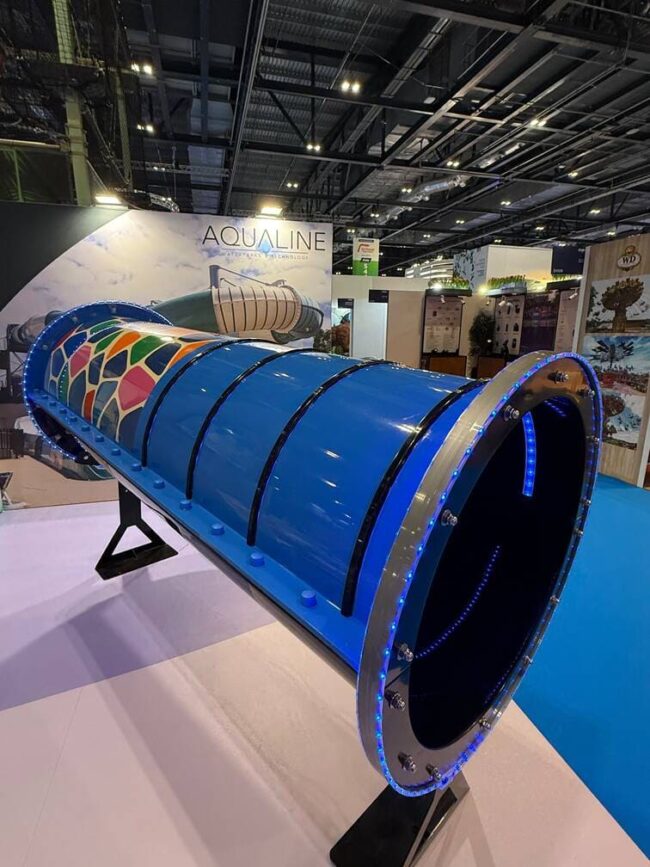
Tower height, run length and the quality of the composite all affect cost. Closed-mould production, such as the L-RTM process Aqualine uses, gives smooth surfaces on both faces and consistent wall thickness. When you compare offers, compare the production method and surface finish, not just the slide length.
Water Treatment, Pumps and Plant Rooms
Splash pools, balancing tanks, filtration, disinfection, pumps and the plant rooms that house them are a significant share of the budget. Water treatment capacity must match bather load and local health regulations, and some projects need separate circuits for different pools. Underground pipe routes, pump pits and access for chemical deliveries all need space and civil works.
Theming, Landscaping and Guest Facilities
Themed structures, custom colors and storytelling elements increase cost but also boost visibility, social media sharing and dwell time. Theming can be scaled: concentrating it at entrances, play structures and slide towers often delivers most of the visual effect for part of the cost.
Guest facilities are part of the project and often part of the operating license: changing rooms, toilets, lockers, first aid, lifeguard stations, food and beverage outlets, shade structures, landscaping, lighting and parking.
Logistics, Installation and Commissioning
For international projects, packing, shipping, customs clearance, cranes and installation teams must be budgeted. A manufacturer that designs, produces and installs its own attractions reduces coordination risk because one party is responsible for the fit between components. Commissioning includes flow tests, test runs, staff training and handover documentation, and it needs time in the schedule before opening day. For a sense of overall timelines, see our FAQ on how long it takes to build a water park.
Operating Costs: The Other Half of the Budget
Construction is a one-time cost; operations run every season. Main items include energy for pumps, heating and lighting; water and chemicals; staff such as lifeguards, operations and maintenance teams; preventive maintenance and spare parts; insurance; and marketing. Seasonal parks also carry off-season costs.
Design decisions made today set these costs for years. Efficient pumps, well-designed hydraulics, durable surfaces that need less refinishing and a layout that is easy to supervise all reduce operating cost. Ask suppliers to state flow rates and pump power for every attraction so you can model running costs, not just purchase prices.
How to Get a Reliable Budget Estimate
- Define your project type, target audience and design-day attendance.
- Commission or prepare a feasibility study covering market, site and revenue model.
- Share a site plan, survey and photos with your manufacturer.
- Ask for a concept layout with an attraction list, footprint, flow rates and capacities.
- Separate the manufacturer’s scope from civil works, buildings and utilities.
- Add contingency appropriate to the project’s stage and site risk.
- Consider phasing: build a core zone first and plan space for expansion.
If you are new to the process, our article I want to build an aqua park: how does the process work? walks through each stage. When you have a site plan ready, you can request an offer for a project-specific estimate.
Frequently Asked Questions
How much does a small hotel aquapark cost compared with a public water park?
A hotel aquapark is usually far smaller in scope: fewer attractions, lower peak capacity and, often, existing pools, plant rooms and guest facilities that can be reused. A public water park must build all its infrastructure, from parking to changing rooms, and size everything for high daily throughput. The gap depends heavily on the site, so a site survey and quote are required for a reliable comparison.
Which costs are most often underestimated in water park projects?
Civil works, utility connections, water treatment and plant rooms are the usual suspects, followed by guest facilities and landscaping. Operating costs are also frequently underestimated during planning. Asking for flow rates, pump power and a clear scope split early helps avoid surprises.
How can I reduce water park construction costs without compromising safety?
Size the park for a realistic design day rather than the absolute peak, use natural slopes where possible, and choose a balanced attraction mix instead of a few oversized rides. Phasing the project and reusing existing infrastructure also help. Never cut corners on structural design, water treatment, standards compliance or professional installation.
Planning a new water park, a hotel aquapark or an upgrade to your existing pool area? Contact the Aqualine team to discuss your site, your guests and your budget, and receive a tailored proposal.