How to Choose a Water Slide Manufacturer: 10 Questions to Ask
A commercial water slide sits at the center of your pool area for many seasons, carries thousands of riders and shapes how guests remember your property. That is why knowing how to choose a water slide manufacturer matters more than comparing the bottom line of three quotes. Price differences are visible on day one; differences in production quality, documentation, installation and after-sales support usually surface only after opening. This guide explains what a manufacturer should deliver, how to verify their claims and which red flags to watch for. It ends with ten questions you can send to every bidder before you sign.
What a Water Slide Manufacturer Should Deliver Beyond the Slide
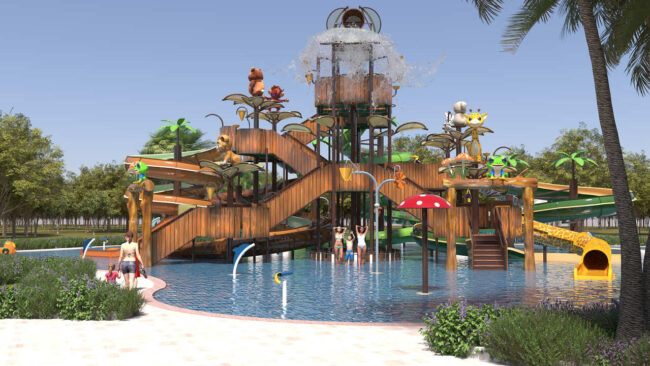
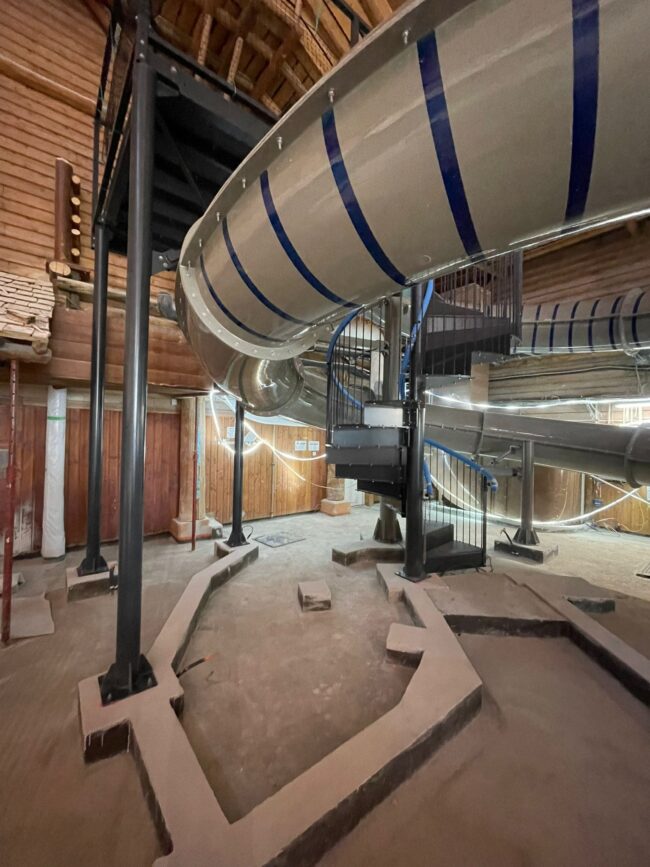
A water slide is a system: composite flume sections, a steel tower or support structure, stairs and platforms, pumps and piping, a splash pool or run-out, and the engineering that connects all of it to your site. A supplier that only ships flume sections leaves you to coordinate the rest, and every interface between contractors adds cost and risk.
Look for a partner that can cover the full chain:
- Layout design based on your site plan, guest profile and capacity target
- Ride path engineering and structural design, including foundation loads
- Controlled production of the composite sections
- Installation or installation supervision, commissioning and staff training
- Spare parts and long-term after-sales service
Aqualine, for example, handles design, production, installation and after-sales for every model in our waterslide range. Whichever company you choose, ask which steps they perform themselves and which they subcontract.
Track Record and Reference Projects You Can Verify
A portfolio page is easy to build; a verified track record is not. Ask for completed projects that resemble yours in scale, climate and type of operation, then go beyond photos. Ask how many seasons each reference slide has been operating, and request a call with the operator about how the surfaces have aged, how quickly spare parts arrived and how the manufacturer responded in peak season.
If your site is abroad, check that the manufacturer has delivered and installed projects outside its home country. Aqualine has 20 years of experience and reference projects in 15 countries, including France, Greece, Australia, Italy, Spain and Japan; you can browse them on our projects page.
Production Technology: Why Closed-Mould Composites Matter
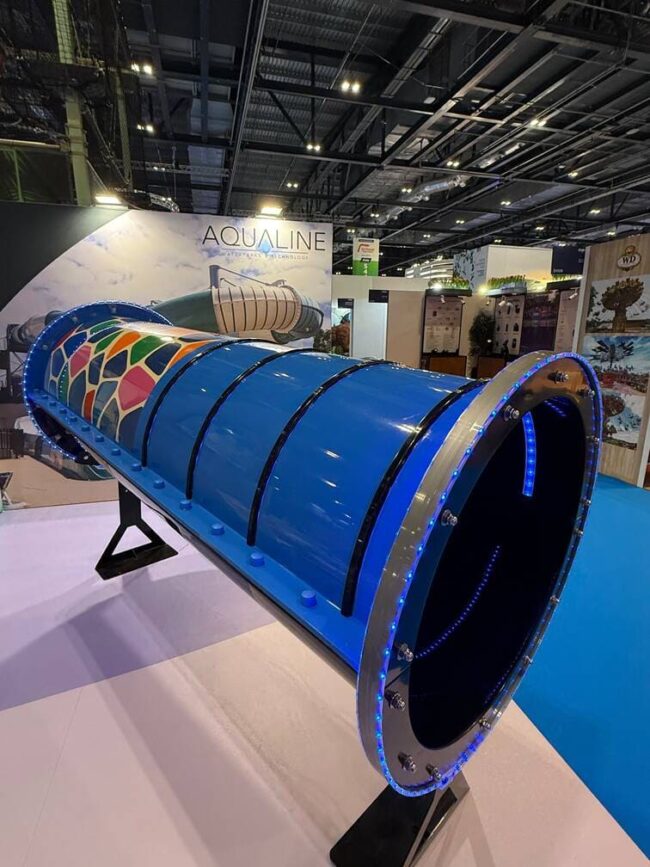
Most commercial water slides are made of fiberglass-reinforced composite, but the production process makes a real difference. In traditional open-mould hand lay-up, only one face of the part is formed against a mould, and wall thickness depends heavily on the operator. In closed-mould processes, resin is injected between two mould halves under controlled conditions, so both faces are finished and the wall thickness is far more consistent.
For a buyer, this affects three things: the smoothness of the riding surface, the appearance of the outside of the slide that guests see and photograph, and how precisely flanges fit at each joint. Aqualine produces sections with Light Resin Transfer Moulding (L-RTM) and RTM, and offers surface options such as NeoShine, NeoTexture, NeoLucent and NeoLight. You can read more about these on our advanced production technologies page and in our article on how LRTM technology combines durability and aesthetics.
Practical questions to ask: which process is used for which part, whether you can see or handle a sample section, and how surface quality is checked before shipping.
Site-Specific Design, Ride Path and Safety Standards
A serious manufacturer starts with your site, not with a catalogue page. Expect questions about available footprint, height restrictions, sun orientation, distance to guest rooms or quiet areas, queue space, exit routes from the splash pool and access for maintenance vehicles. If a quote arrives without anyone having asked these questions, treat it as an indicative price only.
Ride path design determines rider speed, forces and exit conditions. These are engineered and checked against recognized standards: in Europe, the EN 1069-1 and EN 1069-2 series for water slides; in the United States, ASTM F2376. Ask which standards the design follows, which documents you will receive, and whether your local authority requires an independent inspection before opening. A word such as “compliant” in a brochure is not a substitute for project documentation.
Scope, Installation and Commissioning
Two offers with different scopes cannot be compared on price. Use a simple scope check like the one below for every bid.
| Scope item | Question to ask |
|---|---|
| Composite flume sections | Which process and surface finish? |
| Tower, stairs and platforms | Included, and designed by whom? |
| Pumps, valves and piping | Included up to which connection point? |
| Splash pool and foundations | Who designs and who builds them? |
| Transport | Included to which delivery point? |
| Installation and commissioning | Own team, supervision only, or not included? |
| Training and manuals | For operators, lifeguards and technicians? |
Installation quality is as important as production quality. Ask what must be ready before the team arrives, such as foundations, crane access, power and water. A proper handover includes test runs, flow checks, operating instructions, rider rules and a maintenance plan.
Warranty, Spare Parts and After-Sales Support
Warranty terms vary widely, so read them line by line. Ask what is covered for the composite, the surface finish, the steel structure and mechanical equipment, which conditions apply (such as maintenance records or water chemistry limits), and who pays for a technician’s travel.
Spare parts matter just as much. Because the manufacturer owns the moulds, it can produce a replacement section in a matching color; ask how quickly that can happen during your season. Also ask about inspection visits, remote technical help and refurbishment options for later years.
Red Flags When Comparing Offers
- A price without a layout drawing or specification sheet
- Flow rate and rider capacity missing or vague
- “Installation included” without saying who installs and what site preparation is needed
- No reference project you can contact or visit
- Standards mentioned, but no documentation offered
- A price far below the others with no explanation, which usually means something is missing from the scope
How to Choose a Water Slide Manufacturer: The 10-Question Checklist
Send the same list to every bidder. The quality and clarity of the answers will tell you as much as the answers themselves.
- Which completed projects similar to ours can we visit, or discuss with the operator?
- Which production process do you use for flume sections, and can we see a sample?
- Who designs the layout and ride path, and what site information do you need from us?
- Which standards is the design based on, and which documents will we receive?
- What exactly is included in your price, line by line?
- Who installs the slide, and what must be ready on site before your team arrives?
- How is commissioning tested and documented?
- What does the warranty cover, and under which conditions?
- How quickly can you supply spare parts during our operating season?
- What realistic timeline do you propose from design approval to opening?
To understand how our own team approaches these points, read more about Aqualine.
Frequently Asked Questions
What is the difference between a water slide manufacturer and a supplier?
A manufacturer designs and produces the slide sections in its own facility, so it controls the moulds, the production process and the availability of matching spare parts. A supplier or distributor may resell products made by someone else. That can work, but ask who holds the moulds, who answers technical questions and who handles warranty claims, because direct access to the producer usually makes long-term support simpler.
Which safety standards should a water slide manufacturer follow?
In Europe, water slides are generally designed with reference to the EN 1069 series (EN 1069-1 for safety requirements and test methods, EN 1069-2 for instructions). In the United States, ASTM F2376 is the common reference. Local regulations can add requirements, so ask the manufacturer which standards apply to your project and which documents you will receive.
Can I visit reference projects before choosing a manufacturer?
You should ask to. Reputable manufacturers can usually arrange a visit or a call with an operator, and seeing a slide in operation during the season tells you far more than photos. If a visit is not practical, ask for operating videos, recent photos of slides that have run for several seasons and a contact at the operating company.
Comparing manufacturers for a new water park, a hotel aquapark or an upgrade to your existing pool area? Contact the Aqualine team to discuss your site, your guests and your budget, and receive a tailored proposal.